Lower Split Jackpot Risk With a Lucky Numbers Strategy
Math grounded playbook for lucky numbers strategy. Choose games with better odds, buy distinct tickets within a budget, use wheels only at scale, and...

No number-picking system increases a single ticket’s chance in a fair draw. What changes when you get smart about lucky numbers is coverage, split risk, and how intentional your spending is. The practical levers are picking the right game, buying more distinct tickets within a budget, using wheeling only when you’re already buying several lines, and avoiding number patterns thousands of other players also pick.
TL;DR:
- Choosing a smaller-field game with fewer possible combinations improves your baseline odds compared to larger national draws.
- Using quick picks with evenly distributed numbers slightly reduces the likelihood of sharing a jackpot but does not increase individual win chances.
- Wheeler systems guarantee lower-tier prizes if conditions are met but do not improve the overall odds of winning the jackpot.
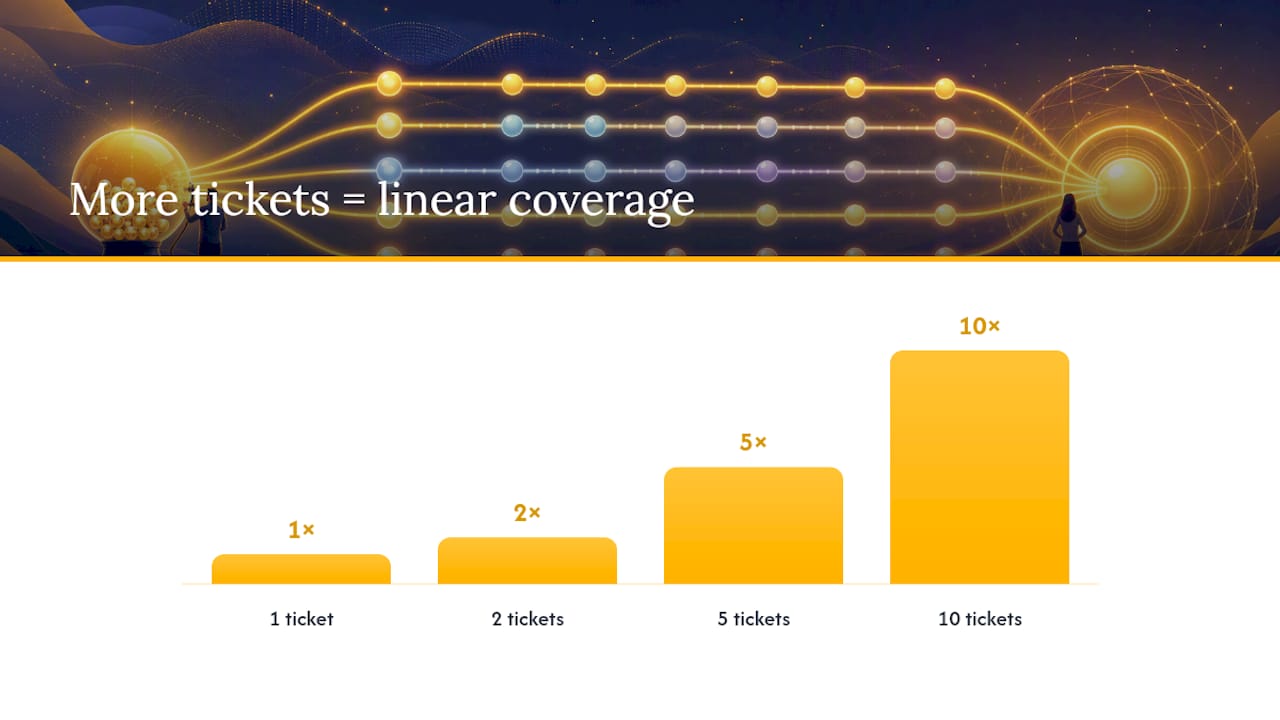
- Buying multiple unique tickets within your budget linearly increases your chances of winning, so setting a strict spending limit is essential for disciplined play.
- Selecting numbers outside the common birthday and pattern traps reduces the risk of splitting a jackpot with many other players, especially by including numbers above 31.
Table of Contents
- Lucky Numbers Strategy Starts With Choosing the Right Game
- Number Selection: Quick Pick vs. Self-Pick and Common Pitfalls
- Wheeling Explained: Guarantees vs. Cost
- Budgeting and the Only Real Way to Raise Your Odds
- Cutting Your Split-Jackpot Risk With Smarter Number Choices
- What a Lucky Numbers Strategy Can’t Do
- How Bet-Mzansi Approaches Lucky Numbers Strategy
- An Honest Take on Playing Smarter, Not Harder
- Build a Smarter Line With Bet-Mzansi’s Free Tools
- Sources
- FAQ
Lucky Numbers Strategy Starts With Choosing the Right Game
Before you think about which numbers to circle, think about which game you’re circling them on. This is the single biggest lever in any lucky numbers strategy, and it’s the one most players skip entirely.
The size of the number pool sets your baseline odds before you’ve picked a single digit. A game that draws 5 numbers from a field of 36 gives you dramatically better match odds than a game drawing 6 from 49, simply because there are fewer possible combinations. Daily numbers games and smaller regional draws almost always beat national mega-jackpot lotteries on a per-ticket odds basis, even though the jackpots are smaller. That trade-off, better odds versus bigger prize, is the real decision every player is making, whether they realize it or not.
Before you buy a line, run through a short mental checklist:
- What are the actual odds of matching the jackpot tier, not just “winning something”?
- How many prize tiers does the game pay out, and what are the smaller-tier odds?
- Is the payout a lump sum or annuity, and does that change the real value of a win?
- Does the game let you play multiple draws or panels on one ticket to spread cost?
Analysts who test lottery approaches consistently land on the same conclusion: game selection and budget control matter more than any number pattern you could choose. If you’re deciding between a Gosloto-style small-field game and a bigger national draw, it helps to look at the specific odds structure of each before committing your budget.
Number Selection: Quick Pick vs. Self-Pick and Common Pitfalls
Every number combination in a fair lottery has exactly the same probability of being drawn. A line of 1, 2, 3, 4, 5 is mathematically as likely as any “random-looking” set of digits. That’s the part of a lucky numbers strategy that trips people up, because it feels wrong. The real question isn’t which numbers are luckier. It’s which numbers are shared by fewer other players, because that determines whether you split a jackpot if you win.
-
Quick Pick draws uniformly across the whole number range. Self-picked lines cluster heavily around birthdays, ages, and anniversaries, all of which live in the 1 through 31 zone. Quick Pick’s even distribution means it naturally avoids that pile-up, which is one reason it can slightly reduce your odds of sharing a jackpot even though it doesn’t improve your odds of winning one.
-
Hot, cold, and “overdue” numbers are historical trivia, not predictions. A number that hit five times in the last twenty draws has zero memory of that fact. The next draw doesn’t know what happened before it. Frequency charts are fun to look at, but treating them as forecasting tools is a well-documented bias, not a real edge.
-
Watch for the three classic human-selection traps. Birthday clustering (everything between 1 and 31), straight-line sequences (7, 14, 21, 28), and visual patterns on the play slip (a diagonal or a border shape) are all wildly overrepresented among the numbers players choose. Studies on how people select “lucky” numbers show a consistent preference for patterns and dates over genuinely random-looking sets, which is exactly why those combinations get shared most often when they hit.
Here’s a quick before-and-after. A typical birthday-heavy line might read 3, 8, 15, 22, 31, all clustered under 31 with an odd/even split of 4 to 1. A more balanced version of that same budget might look like 8, 15, 22, 34, 41, keeping two of the original numbers but pulling two into the higher range and evening out the odd/even mix. Same cost, same draw odds, meaningfully lower chance of splitting a win five ways.
Wheeling Explained: Guarantees vs. Cost
A wheel is a system for arranging multiple tickets so that if enough of your chosen numbers get drawn, you’re guaranteed to catch certain smaller prizes across your set of lines. A full wheel covers every possible combination within your chosen number pool. An abbreviated wheel covers a smaller, cheaper subset while still guaranteeing a specific outcome, like at least one 3-number match if 5 of your numbers land.
Here’s the part that trips people up: wheeling reorganizes your coverage, it doesn’t improve your odds. Wheeling systems guarantee certain lower-tier prize captures if the draw cooperates, but you’re paying full ticket price for every line in the wheel. Ten lines in a wheel cost exactly the same as ten unrelated Quick Picks. The jackpot odds for any single one of those combinations don’t budge.
That leads to a simple decision rule:
- Only use a wheel if you were already planning to buy several lines for one draw.
- If your budget only stretches to one or two tickets, skip wheeling and buy unique lines or Quick Picks instead.
- Match your wheel size to your budget, not the other way around.
Pro Tip: Set a specific guarantee target before you pick a wheel size, like “guarantee at least one 3-of-5 match,” then choose the smallest abbreviated wheel that delivers that guarantee. Buying a bigger wheel than your target requires is just spending more for the same promise.
Budgeting and the Only Real Way to Raise Your Odds
There’s exactly one mathematically valid way to raise your raw odds of winning: buy more distinct, non-repeating tickets. Two unique lines give you double the combinations in the draw pool compared to one. Ten unique lines give you ten times the coverage. That’s linear, it’s real, and it’s also expensive fast, because odds on most lotteries run into the millions to one.
Set a spending cap before you buy, not after. A weekly or monthly limit you can genuinely afford to lose, whether that’s a few dollars or a bit more, keeps the “strategy” part of this from turning into a spiral. Rollover jackpots do briefly shift the math in your favor since the prize pool grows while the odds stay fixed. Even then, the improvement rarely makes buying dozens of tickets a rational use of money. It just makes the entertainment slightly better value.
A simple way to stretch a small budget with structure:
- One Quick Pick line for broad, evenly distributed coverage.
- One self-picked balanced line, mixing high and low numbers.
- One or two wheel-based lines only if you’re already at three or more tickets total.
Five tickets split this way costs the same as five random ones. It’s just organized on purpose.
Cutting Your Split-Jackpot Risk With Smarter Number Choices
If you ever do hit a jackpot, the number you actually take home depends on how many other winning tickets exist. That’s the one lever a lucky numbers strategy genuinely controls.
Birthday numbers, all crammed between 1 and 31, get chosen constantly, which means a big win on a birthday-heavy line often gets divided many ways. Including at least two or three numbers above 31 in games with a larger number field sidesteps a huge share of the field that’s still fishing around in the birthday zone.
A few concrete rules make this easy to apply:
- Aim for at least 2 numbers higher than 31 if your game’s range allows it.
- Skip obvious sequences like 2, 4, 6, 8, 10 or straight rows on the play slip.
- Avoid corner patterns and diagonal shapes many players pick out of habit rather than thought.
A line like 5, 12, 19, 27, 31 is a textbook shared combination. A line like 5, 19, 27, 38, 44 keeps some familiar numbers but spreads risk into territory fewer players ever touch.
What a Lucky Numbers Strategy Can’t Do
Every draw is independent. The balls don’t remember what came up last week, last month, or last year. That’s not a technicality, it’s the entire mechanism of a fair lottery, and it’s why no number-selection method changes a single ticket’s underlying probability. Believing a “due” number is more likely to hit is the gambler’s fallacy in its purest form.
A few signs it’s time to step back from lottery play:
- You’re spending money you’d earmarked for bills or essentials.
- You’re chasing losses by increasing your ticket count after a bad run.
- Lottery play feels compulsive rather than fun.
If any of that sounds familiar, BetMzansi’s responsible gambling guidance walks through practical limits and where to get support. Treat the lottery as entertainment with a fixed cost, never as an investment plan.
How Bet-Mzansi Approaches Lucky Numbers Strategy
Lucky numbers coverage focuses on structure, not prediction, because structure is the only part of this equation you actually influence. That is the position the guides emphasize: game odds, coverage math, and split-risk avoidance are real levers; hot numbers and lucky charms aren’t.
If you want to put these tactics into practice, Bet-Mzansi’s best betting sites for lucky numbers formats breaks down where UK49s and Gosloto-style games are available and how they compare on odds. The Gosloto 5/36 strategy guide applies the smaller-field logic covered above to a specific, popular game. And the broader tips section collects additional guides for building disciplined, budget-aware play habits across different formats.
An Honest Take on Playing Smarter, Not Harder
Play intentionally. Set a budget before you look at a single number, and lean on structure over superstition, because structure is the only variable you control. A hot-numbers list feels like insider knowledge. It’s really just a list of things that already happened, which tells you nothing about tonight’s draw.
Try this for one week: pick a fixed amount you’re comfortable spending, then run the five-ticket method above exactly once. See how it feels to play with a plan instead of a hunch.
— Nkosi
Build a Smarter Line With Bet-Mzansi’s Free Tools
Bet-Mzansi gives you the practical building blocks this article just walked through, without asking you to guess which numbers feel lucky. The lucky numbers betting site guide shows exactly where UK49s and Gosloto-style games run, and the Gosloto 5/36 odds and smart-play guide gives you the game-selection math to compare against bigger national draws.
If you’re newer to structured play, the betting glossary clears up formats and terminology fast, and if you want to compare tools for structuring and sharing your picks, ParlayGeeks offers slip-building features worth a look.

Once you’ve built a balanced, less-shared line, the next step is picking where to actually play it. Bet-Mzansi’s best betting sites in South Africa rounds up licensed, reviewed options so you can compare payout speed and reliability before you commit your budget. Build the line, check the site, then place it with a plan instead of a hunch.
Sources
- The psychology of the lottery: gambling with our mental limits — UTPB Online
- Luck, randomness, and number choice — Springer (research paper)
FAQ
How Do I Win Lucky Numbers for Today’s Draw?
There’s no method that predicts today’s specific draw, since each drawing is independent of past results. Your best move is choosing a game with better odds, building a balanced line, and setting a firm budget before you buy.
What Are the Five Most Common Lucky Numbers?
Frequency lists vary by game and region and change constantly as more draws happen, so there’s no fixed universal answer. Treat any published “most common numbers” list as historical trivia, not a forecast.
What Is the Best Strategy to Pick Lottery Numbers?
The best approach combines choosing a game with favorable odds, buying multiple unique tickets within your budget, and mixing numbers above and below 31 to reduce jackpot-splitting risk. Sites like BetMzansi’s tips section walk through this structure for specific games.
What Are the Top Six Luckiest Numbers?
No six numbers are inherently luckier than any other combination, since every set carries identical draw probability in a fair lottery. Any “luckiest numbers” ranking reflects past frequency, which has no bearing on future draws.